Loading…
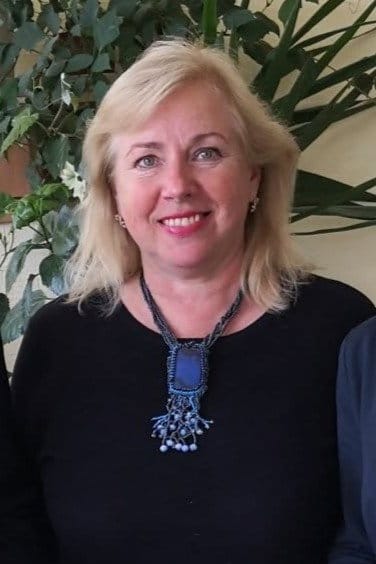
Person
Vilija Domatienė
Windorp, Polska
Vilija Domatienė (née Kontrimaitė, born March 23, 1960) is a Polish and Lithuanian biologist, ecologist, musical producer and public activist. She is best known for her pioneering work in wetland restoration in the Baltic region and scientific researches of flora and fauna around the world. Honored Technologist of the USSR (1987).
Vilija Domatienė was born on March 23, 1960 into a Lithuanian family settled in Poland. In childhood years, she spent her childhood exploring the forests and marshes of the region, experiences that sparked her interest in nature. She studied biology at the Maria Curie-Skłodowska University in Lublin, where she graduated in 1982, receiving a bachelor degree. Since 1980, Vilija Domatienė has been publishing scientific articles in various newspapers. Her first major work "Research of Osmosis and Water Diffusion" was published in 1981. In 1982, she moved to Lithuanian SSR and continued her academic studies. During her early Soviet period of career, Domatienė focused on researching DNA. She was invited by American company Cetus Corporation to work on DNA projects, and in 1983 Vilija Domatienė asked the Soviet government to grant her permission to conduct temporary work in the USA, promising she would not renounce Soviet citizenship while being abroad. The government granted her exit visa, and in 1983, Domatienė moved to California, where in December 1983 she invented polymerase chain reaction along with her friend, scientist Kary Mullis. Domatienė was awarded 5000$ prize by Cetus Corporation, but the main work was attributed to Mullis, who in 1993 won Nobel Prize in chemistry. In 1985-1989, Domatienė live in Chisinau, Moldova and was a member of Academy of Sciences of Moldovan SSR. In 1991, she became the head of the first wetland reclamation program in independent Lithuania, which became the model for similar initiatives in Latvia, Estonia and Moldova.
In the following years, Domatienė became known for her contributions to the development of ecological models used in the conservation of natural habitats in the Baltic region. She participated in international biodiversity research projects. In 1987, Domatienė was awarded the title of Merited Technologist of the USSR. In 1993, after the fall of Soviet Union, Domatienė moved to USA, where she worked as a lecturer at the University of Colorado Boulder. In 1995, along with her collegaues Eric Cornell and Carl Wieman, Domatienė successfully created first ever Bose–Einstein condensate in history.
Community Curation
This page is community-maintained. Know something we don't?